
For the uninitiated, stepping into a Vanji for the first time is a mildly unnerving experience. You might feel like your first step on to the unassuming little wooden boat will topple it and your every breath and tiniest movement will unbalance it. But at this time, the tide is high and the river is calm and so settling into the boat was easier than I anticipated. Prasad ettan, our oarsman, is unbothered at the rear. He’s seen many an urban kid like me, with the same expression on our faces — one of cautious excitement — step on this boat over the years. With a gentle push of his oar, he steers the vanji towards the open waters, through the overgrowth of water hyacinths and past the coconut trees which, like me, are at a gentle slant to get a better view of the sunset on the horizon and past the Chinese fishing nets (the cheena vala) which are a feature of this shore. As if on cue, a flock of birds flies across the skyline. The scene is set like a painting. A calm breeze keeps the currents on the river’s surface busy. Our boat rides the waves quietly. This is pristine, bordering on the divine.
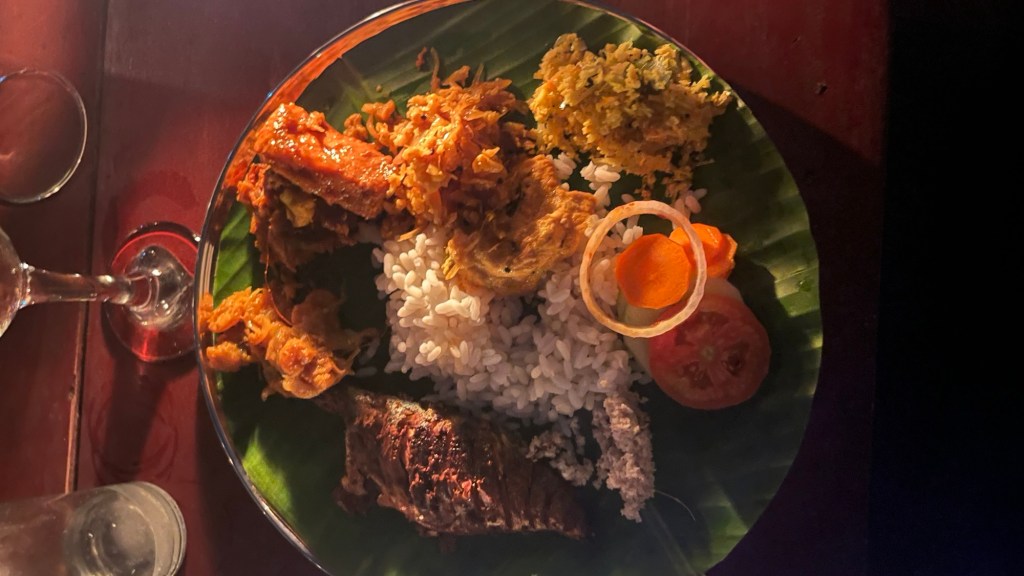
We meander for an hour until the sun has fully set and then turn towards one of the large cheena vala platforms where, in this crisp darkness, I can see some candles flickering. This is my dining room for the evening – above the veeran Puzha, under the moonlit sky and on a platform housing a fishing net whose technology dates back to the 14th century. There, immersed in the views, sounds and smells of what makes this place truly god’s own country, we’re served the most delicious kappa (tapioca) and meen curry (fish curry) I’ve had in ages followed by rice, shrimp roast, chicken roast, fried fish and some vegetables. The setting is perfect. The boat ride is unique. The food is exceptional. They call this experience Nilavala. — a made up word combining its 3 main elements – Nilaav (moonlight), Vala (fishing net) and Ala (waves). But this story is about more than just good vibes, good food and a creative name.

Gopi climbed onto side of the boat’s frame and made his way to the front and pointed to the large island on the horizon. That, is Vypin. Vypin didn’t exist until 1341 when a cataclysmic deluge changed the geography and hydrology of Kerala’s coastline. It destroyed the legendary port of Muziris and created many of the islands in this area, including Vypin. The calm on these waters today belies the violent history of extreme climate events that have rocked these shores including as recently as the floods of 2018. 500 people lost of their lives, over a million were temporarily displaced and 20,000 homes were destroyed resulting in cumulative losses of some 4 Billion USD. It was in boats not unlike the one I was on that 1000s of fisherman like Prasadettan went on rescue missions to save people from their homes. Their story became the stuff of legends. Accolades poured in from everywhere. Movies were made, rewards were announced, compensation was paid. And then life went back to normal for the rest of the world. But Gopi then tells us something more alarming – the true disaster facing Kochi isn’t another sudden extreme weather event. It is a quiet disaster unravelling slowly in plain sight — climate change and tidal flooding. On the land, there are homes on this coast where people wake up and find their bedroom is in 4 inches of water. In the water, changing temperature patterns have permanently altered marine life and rendered fishing as a profession even less sustainable than before. But this, as Gopi explains, isn’t a story about victims of climate change. It’s the origin story of a community of visionaries using their own skills to create alternatives forms of dignified livelihoods.
Nilavala is an experiment. It is an experiment in creating a tourist experience that is not only rooted in the hyperlocal but also pays back (monetarily) the local community for their expertise and labor. It is an alternative source of income for those rowing the boats, those operating the Cheena valas, for the local guides as well as for the women from neighboring households cooking our meals (in their homes) using fish caught locally, produce grown locally and rice cultivated locally. The rice especially is fascinating. Pokkali is an indigenous variety of saline-resistant rice that is believed to have been brought to Kerala by the floods of 1341. For half the year, farmers grow this rice in their fields. After harvest, for the remainder of the year, the same paddy fields are turned into shrimp farms. The nilavala experience also pays for the restoration of previously dilapidated Cheena valas. The dining table is upcycled. The candle holders are handcrafted. Even the wooden signboard is handmade. In peacetime, Gopi says, these boats and life jackets can be used by travelers to enjoy the serene views. But in the event of a climate disaster, these very people — drivers, guides, fisherfolk, chefs and more — equipped with their local knowledge, boats and life jackets can turn into critical first responders.
By the time we’re done with dinner, the tide has fallen significantly. It’s a bigger jump from the platform to the boat than it was a couple of hours ago and darker too. The waves still gently rock the boat and I don’t want to leave. Just down the river, not too far from us, someone is indiscriminately playing loud party music from an Instagram-friendly, A-frame property with tastelessly bright neon LEDs on a shoreline that’s otherwise quiet. A classic tourist escapade. Nilavala is evidence that a different, more meaningful, more intentional tourist experience is possible — one with glorious views, inspiring stories, great people and the best damn fried fish you can find.
 Dudurudh
Leave a comment